
US Senate Approves New Sanctions on Russian Oil and Gas
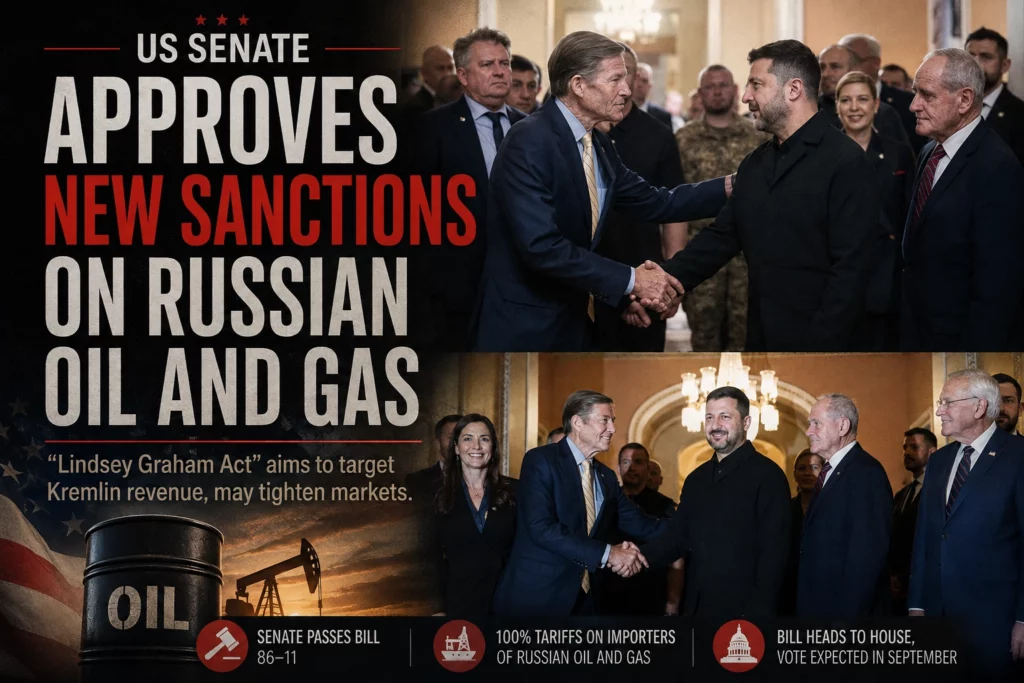
JOHANNESBURG — The United States Senate on Aug 8 overwhelmingly passed a bipartisan sanctions bill targeting Russia’s energy exports. Dubbed the “Lindsey O. Graham Sanctioning Russia and Iran Act of 2026”, the legislation would impose up to 100% tariffs on major importers of Russian oil and gas, including China, India and potentially South Africa if they continue buying discounted Russian fuel. The measure (86–11 vote) also expands powers to block clandestine shipping networks that enable evasion of Western embargoes. The bill now goes to the US House of Representatives, with an expected September vote.
Analysis: US Senate sanctions and what it means
1) Global oil prices. If enacted, these sanctions could further tighten the global oil supply by making Russian crude more costly or scarce. For South Africa, which buys some Russian diesel on global markets, the effect may be indirect but material. Higher Russian prices could lift global benchmarks, feeding into South African fuel costs. Local traders will watch if Russian diesel sales drop or reroute to non-compliant countries.
2) South Africa’s stance. SA is not a major Russian oil buyer, but South African diplomats opposed earlier Russia sanctions. The bill’s targeting of even neutral or friendly countries has drawn criticism from some U.S. lawmakers. Pretoria may face calls to maintain and explain its energy sourcing policy. Minister Ebrahim Patel has defended purchasing discounted Russian diesel to ease local fuel prices. If global tariffs make Russian oil less competitive, it could validate South Africa’s approach (so far), since a higher Russian fuel price would diminish that cost advantage.
3) Financial and political fallout. The sanctions reflect bipartisan US support for Ukraine’s defense (President Zelenskyy endorsed the move). They could strain relations between the US and countries like China, India or South Africa if applied. The European Commission, which welcomed the Senate vote, sees it as pressuring Russia’s war finance. South African businesses trading with Russia (arms, nuclear fuel, etc.) should assess any indirect consequences, though energy trades would be hit hardest.
What’s next
The bill faces uncertainty in the House, where some members worry about collateral effects. If passed, the US Treasury would issue secondary sanctions guidelines, likely by year-end. Global oil traders would then adjust: cargoes of Russian crude might seek new markets, while buyers like India might push back. In South Africa, the government will monitor the situation and possibly seek waivers or carve-outs for critical sectors (e.g. nuclear fuel from Rosatom). Ultimately, South African consumers and industries should brace for a potential increase in fuel and energy costs if Russian discounts disappear. Meanwhile, global energy market analysts will update forecasts, and policymakers here may have to reassess fuel tax assumptions and subsidies in the 2027 budget.