
Brent Oil Rises on Iran War Uncertainty
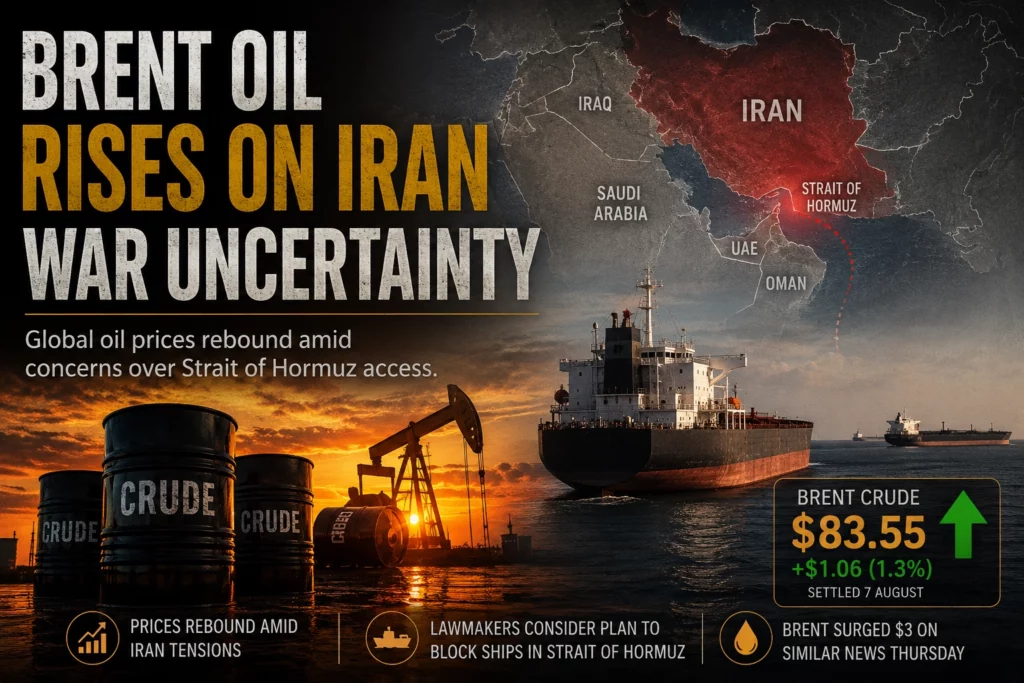
JOHANNESBURG — Oil prices climbed on Aug 7 as geopolitical tensions in the Middle East kept traders uneasy. Brent crude settled at $83.55 per barrel, up $1.06 (1.3%), after falling earlier in the week on hopes for a resolution to the U.S.-Israel conflict with Iran. The rebound came on news that Iranian lawmakers were considering a plan to block U.S. and Israeli ships from the Strait of Hormuz, a crucial chokepoint for global oil and LNG. On Thursday, Brent had briefly surged $3 on similar news.
Analysis: Brent oil rise and what it means
1) Energy price pass-through. As a net oil importer, South Africa is sensitive to crude price swings. The recent rise in Brent suggests fuel price relief may be delayed. South African retailers could see a modest uptick in petrol and diesel futures in coming weeks, which would feed into the inflation gauge. This adds pressure on already-high transport costs affecting everything from food distribution to commuter travel.
2) Market context. Although Brent is up, it was still down over 8% for the week, signaling volatility. Analysts note that speculation on Iranian legislative actions (“on-again, off-again” from Reuters) is driving the roller-coaster. Finance Minister Enoch Godongwana and the South African Reserve Bank will monitor these trends, as volatile oil can affect inflation. If prices stay above $80, domestic petrol levies (set in USD) effectively increase, further straining consumers.
3) Alternative supplies. South Africa’s petrochemical sector (refineries) may seek alternative suppliers or hedge fuel to mitigate these shocks. SA often buys crude on global spot markets; a prolonged surge could reduce refinery margins. The government might consider releasing strategic fuel reserves if domestic shortages emerge, but currently imports via Persian Gulf (Iran-linked) routes are being watched closely.
What’s next
Traders will focus on diplomatic developments. Any sign of a U.S.-Iran deal would likely send oil prices down quickly, easing local inflation. However, further drone or missile attacks (Houthi or Iranian-backed) could quickly reverse gains, keeping policy makers nervous. In SA, Treasury will factor August 2026 inflation around 4.7–4.9% which already includes previous fuel jumps. The next monthly petrol price announcement (mid-Aug) will be a telling barometer of how much this recent oil rally filters through to pump prices. Households should prepare for price uncertainty; motorists might try to fuel up quickly, while freight operators may hedge fuel contracts.